🐾 Blog Article
Is Your Cat Hiding Pain? Use PawSense for Feline Pain Detection
Detect hidden cat pain with the PawSense AI app. Uses Feline Grimace Scale for precise analysis of facial expressions, revealing subtle signs of discomfort.
Is Your Cat Hiding Pain? Use PawSense for Feline Pain Detection
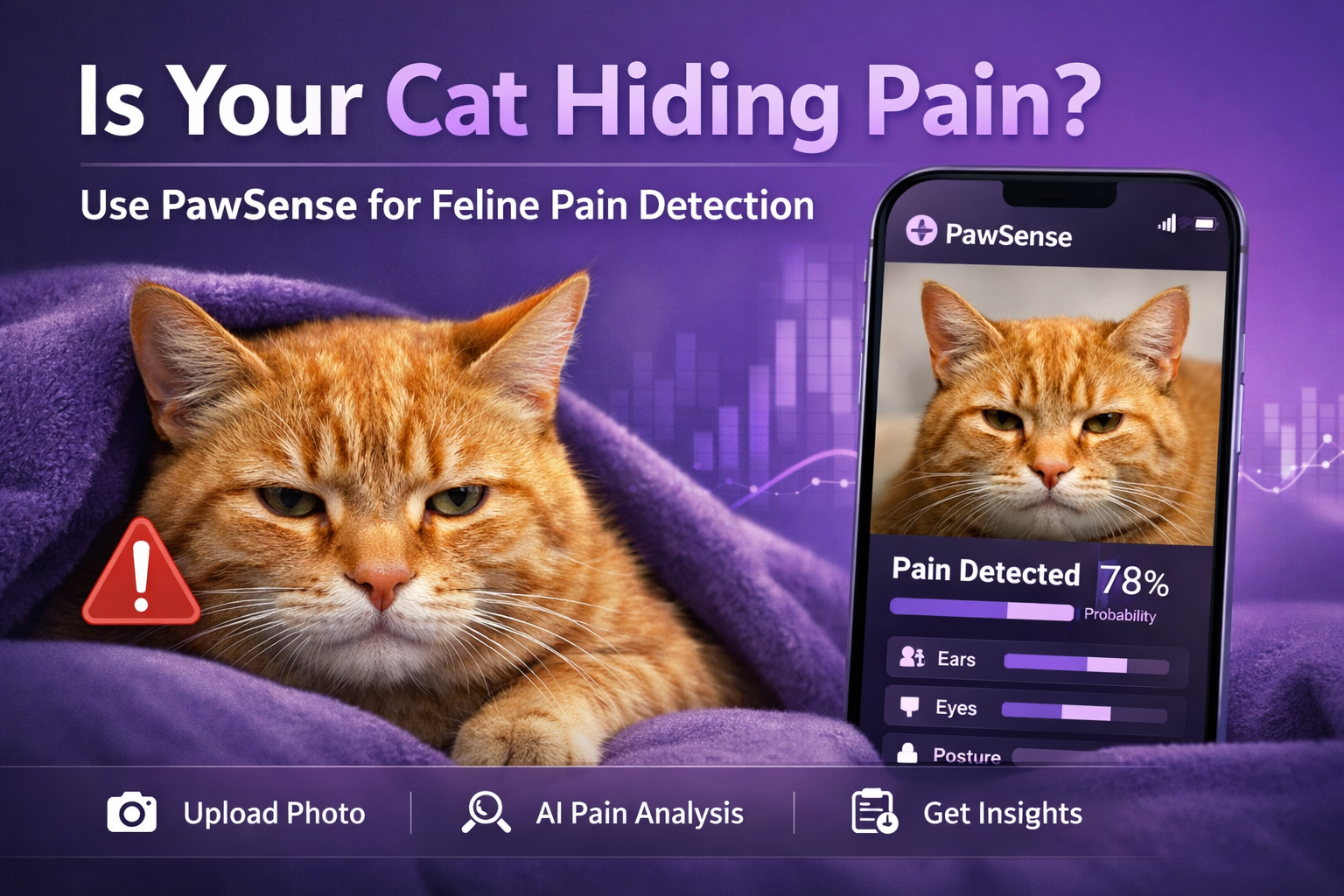
Cats are masters of disguise, especially when it comes to pain. Their innate instinct to hide weakness, a survival mechanism from their wild ancestors, means that by the time you notice overt signs of discomfort, your feline friend might have been suffering in silence for a while. This can be incredibly distressing for pet owners who want nothing more than for their beloved companions to be happy and healthy. Fortunately, with advancements in artificial intelligence, a new tool is available to help you pierce through their stoic facade: the PawSense cat pain detection app.
This revolutionary application empowers cat owners to proactively monitor their pet's well-being by analyzing subtle cues often missed by the human eye. PawSense leverages the scientifically validated Feline Grimace Scale (FGS) to interpret your cat's facial expressions, providing an objective assessment of potential pain. If you've ever wondered if your cat's slight behavioral changes or withdrawn nature signal underlying discomfort, this article will guide you through understanding feline pain and how PawSense can be your indispensable ally in ensuring your cat lives a comfortable, pain-free life.
We'll delve into why cats hide pain so effectively, how the Feline Grimace Scale works, and how PawSense's AI precision brings this veterinary tool directly into your home. Discover how you can stop guessing and start understanding your cat's silent language of pain, leading to earlier veterinary intervention and improved quality of life.
The Silent Sufferers: Why Cats Hide Pain So Well
It’s a heartbreaking reality for many cat owners: cats are experts at concealing pain. Unlike dogs, who might vocalize, limp, or act outwardly distressed, cats often withdraw, become less interactive, or subtly alter their routine when in discomfort. This stoicism is deeply ingrained, stemming from their evolutionary history as both predator and prey. In the wild, showing weakness could mean becoming a target or being rejected by the group, so felines developed a powerful instinct to mask any signs of illness or injury.
This natural inclination makes it incredibly challenging for even the most attentive pet parent to identify when their cat is suffering. Owners might mistake pain for "just getting older," "being grumpy," or "sleeping more." These subtle changes, however, can be critical indicators of anything from arthritis and dental disease to organ issues or post-surgical discomfort. Delaying the detection of pain can lead to prolonged suffering, worsen existing conditions, and make treatment more complex once the pain becomes severe enough to be undeniable.
Understanding this inherent trait in cats highlights the critical need for a more objective, systematic approach to pain assessment. Relying solely on obvious signs means waiting until the pain is significant, often when treatment options are more limited or the condition has advanced. This is precisely why tools that can detect pain earlier and with greater accuracy are vital for every cat owner, shifting the paradigm from reactive care to proactive health monitoring. Why Early Pet Pain Detection is Crucial for Your Furry Friend's Life explains further the importance of proactive monitoring.
Applying the Feline Grimace Scale with AI Precision
The Feline Grimace Scale (FGS) is a validated, scientific tool developed by veterinary researchers to assess pain in cats based on changes in their facial expressions. It evaluates five key "Action Units": ear position, orbital tightening (narrowing of the eyes), muzzle tension, whisker changes, and head position. Each unit is scored from 0 (no pain) to 2 (obvious pain), providing a composite score that correlates with the severity of discomfort. Veterinarians often use FGS in clinical settings, but its application requires trained observation and experience, making it difficult for the average pet owner to use consistently and accurately.
This is where the PawSense feline grimace scale app revolutionizes pet care. By integrating advanced artificial intelligence and computer vision technology, PawSense brings the precision of the FGS directly to your smartphone. Users simply upload photos of their cat, and the app’s AI, powered by Google Gemini 2.5 Pro vision model, meticulously analyzes these five key facial indicators. It then provides an objective pain probability score and a dimension-by-dimension analysis, offering insights that would typically require a veterinary expert.
PawSense doesn't just give a number; it translates complex scientific assessment into an understandable format for pet owners. This bridge between cutting-edge AI and established veterinary science means you no longer have to second-guess if your cat's slightly narrowed eyes or flattened ears are just a mood or a genuine cry for help. The app democratizes access to this crucial diagnostic tool, enabling consistent monitoring and informed decision-making about your cat's health. For a deeper dive into the technology, read about How PawSense AI Detects Pet Pain: The Science Behind the App and its application of the Understanding Your Cat's Pain: The Feline Grimace Scale with PawSense.
Recognizing Subtle Changes in Your Cat's Face
Understanding the specific facial cues that the Feline Grimace Scale (FGS) – and by extension, the PawSense app – analyzes is key to appreciating the power of this cat facial expression pain detection method. While the app does the heavy lifting, knowing what it’s looking for can help you become more attuned to your cat's subtle signals even before you reach for your phone.
Here’s a breakdown of the five FGS Action Units:
- Ear Position: In a pain-free cat, ears are typically forward or slightly to the side. When in pain, ears might flatten and rotate outwards, resembling a "bunny ear" or "airplane ear" position.
- Orbital Tightening: This refers to the narrowing of the eye opening. A comfortable cat has wide, open eyes, whereas a cat in pain might squint or have eyes that appear more closed, tense, or "squinty."
- Muzzle Tension: A relaxed cat's muzzle is usually rounded. Pain can cause the muzzle to become tense and elliptical, pulling back towards the head, creating a stretched or pointed appearance.
- Whisker Changes: Relaxed whiskers are usually loosely curved and away from the face. When in pain, whiskers can straighten and move backward or flatten against the cheeks.
- Head Position: A comfortable cat often holds its head high and alert. A cat experiencing pain might hold its head lower, below the shoulder line, or in line with the body, sometimes tucked in.
PawSense's AI can detect these minute alterations with incredible precision, often identifying changes too subtle for the human eye to consistently pick up. The app processes hundreds of data points from a single photo, comparing your cat's current expression to known pain indicators within the FGS framework. This allows for early intervention, ensuring your cat gets the care they need before their discomfort escalates. It's not about replacing your intuition but augmenting it with scientific, objective data.
Real Stories: How PawSense Helps Cat Owners
The power of an AI-driven cat pain detection app like PawSense isn't just in its technology; it's in the real-world impact it has on the lives of cats and their owners. Imagine Sarah, whose older cat, Mittens, had always been aloof but recently seemed even more withdrawn. Mittens was eating less, not jumping onto furniture, and just "seemed off." Sarah initially attributed it to old age, but a friend recommended PawSense. After uploading a few photos, the app indicated a moderate pain probability, specifically highlighting orbital tightening and whisker changes. Armed with this objective data, Sarah visited her vet, who diagnosed Mittens with early-stage arthritis, which could be managed with medication. Mittens is now more active and playful, all thanks to early detection.
Or consider John, whose lively young cat, Leo, had a minor skirmish with another neighborhood cat. Leo seemed fine afterward, no obvious limping or wounds. However, John used PawSense for a routine check, and the app flagged a low but present pain probability. The vet discovered a small, deep muscle bruise that, while not outwardly visible, was causing Leo discomfort. Timely pain relief prevented further irritation and allowed for faster healing.
These stories illustrate how PawSense provides peace of mind and enables proactive care. It empowers owners to take action before symptoms become severe, preventing prolonged suffering and potentially costly, complex treatments down the line. By giving a voice to your cat's hidden pain, PawSense transforms anxious guesswork into informed decisions. Whether for routine wellness checks or concerns about subtle behavioral shifts, the app offers an invaluable layer of insight. Get Your Free Pain Check Today! and join the community of proactive pet owners.
Beyond Facial Expressions: Holistic Observation
While the PawSense feline grimace scale app provides unparalleled insight into your cat's facial pain cues, it's crucial to remember that a cat's well-being is multifaceted. Pain manifests not only in subtle facial expressions but also through changes in behavior, posture, and routine. PawSense is designed to complement, not replace, the pet owner's observational skills and, ultimately, veterinary consultation.
Beyond uploading photos for AI analysis, PawSense also allows users to input behavioral details. This comprehensive approach is vital because a cat's pain response is complex. For example, a cat with dental pain might show FGS signs, but also exhibit drooling, reluctance to eat dry food, or pawing at its mouth. A cat with abdominal pain might adopt a hunched posture, refuse to be picked up, or vocalize when touched in specific areas. Combining the objective data from the FGS analysis with your personal observations creates a more complete picture of your cat's health.
Think of PawSense as an advanced tool in your pet care arsenal, augmenting your ability to understand your pet's needs. It helps you identify when those subtle behavioral changes—like increased hiding, decreased grooming, or unusual litter box habits—might be linked to physical discomfort. The detailed reports generated by PawSense include home observation tips and vet visit recommendations, guiding you on what other signs to look for and what questions to ask your veterinarian. This holistic approach ensures that no stone is left unturned in your quest to provide the best possible care for your cherished feline. For more guidance on what to look for and when to act, check out Pet Pain Management: Home Observation Tips & Vet Visit Guidance.
Frequently Asked Questions (FAQ)
How accurate is PawSense for detecting cat pain?
PawSense leverages the Feline Grimace Scale (FGS), a scientifically validated tool used by veterinarians, and enhances it with advanced AI (Google Gemini 2.5 Pro vision model). While highly accurate in identifying facial pain cues, it provides a probability, not a diagnosis. It's an excellent early detection and monitoring tool, but a definitive diagnosis should always come from a qualified veterinarian.
Can PawSense replace a veterinary visit for my cat?
No, PawSense is a powerful aid for pet owners and veterinarians, not a replacement for professional veterinary care. It helps you detect potential pain early and objectively, providing valuable information to share with your vet. A veterinarian can perform a comprehensive physical exam, conduct diagnostics, and prescribe appropriate treatment.
What if my cat is too aggressive or scared to take a good photo for PawSense?
Capturing a clear photo can sometimes be challenging. Try to take photos when your cat is relaxed, perhaps when they are resting or distracted by a treat or toy. Ensure good lighting and a clear view of their face. If your cat is exhibiting aggression due to pain, it's a strong indicator that a vet visit is urgently needed, and you should prioritize seeking professional help.
How often should I use the PawSense app for my cat?
For general wellness monitoring, a weekly or bi-weekly check can be beneficial, especially for older cats or those with known chronic conditions. If you notice any subtle changes in behavior, appetite, or energy levels, using PawSense immediately can help determine if pain is a contributing factor. Consistent use allows you to establish a baseline for your cat's normal expressions.
Conclusion
Detecting pain in cats has long been a challenge, given their innate ability to mask discomfort. However, with the emergence of the PawSense cat pain detection app, pet owners now have an invaluable tool to bridge this communication gap. By harnessing the power of the Feline Grimace Scale and cutting-edge AI, PawSense provides an objective, accessible, and proactive way to monitor your feline friend's well-being. It empowers you to recognize subtle facial cues of pain, even before they become apparent to the untrained eye, ensuring that potential health issues are addressed much earlier.
Don't let your cat suffer in silence. Integrating PawSense into your routine means moving from anxious guesswork to informed action, providing your cat with the comfortable, happy life they deserve. Early detection is key to effective treatment and better outcomes, giving you and your furry companion more precious moments together.
Take the first step towards a deeper understanding of your cat's health. Start Detecting Your Cat's Pain Early with PawSense today and unlock the silent language of your feline friend.