🐾 Blog Article
Demystifying Pet Pain Scales: FGS & GCPS Explained for Owners
Unlock your pet's secrets to pain with Feline Grimace Scale (FGS) and Glasgow Composite Pain Scale (GCPS). Learn how these vet-validated tools and PawSense AI help you read your pet's discomfort and take proactive steps.
Demystifying Pet Pain Scales: FGS & GCPS Explained for Owners
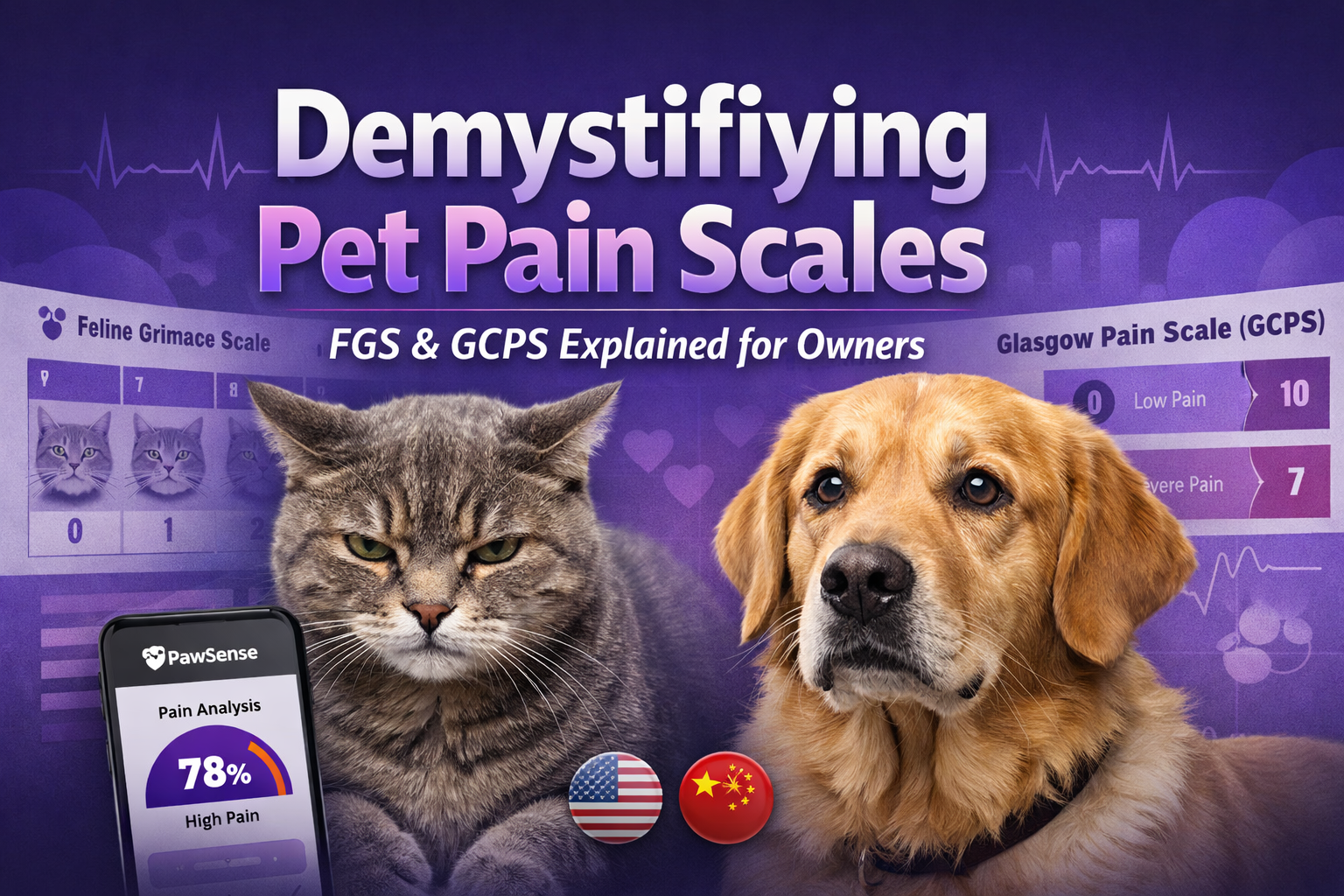
Our furry companions enrich our lives in countless ways, but their natural instinct to hide discomfort can make identifying pain a heartbreaking challenge for even the most devoted pet owners. Unlike humans, pets can't verbally communicate their aches and pains, often suffering in silence until their condition becomes severe. This communication barrier often leaves owners feeling helpless, wondering if their beloved cat or dog is truly comfortable or if subtle signs of distress are being missed.
Fortunately, veterinary science has developed sophisticated tools to help us understand our pets' pain. Among the most widely recognized and validated are the Feline Grimace Scale (FGS) for cats and the Glasgow Composite Pain Scale (GCPS) for dogs. These pet pain scales offer objective frameworks to assess discomfort, moving beyond mere guesswork. By understanding how these scales work, pet owners can become more attuned to their animals' well-being.
This article will pull back the curtain on these crucial vet pain assessment scales, explaining their components and how they empower both veterinary professionals and vigilant owners to better monitor their pets. We'll delve into the specifics of the FGS for decoding your cat's subtle facial cues and the GCPS for assessing your dog's overall behavior and posture. Moreover, we'll reveal how modern AI tools, like PawSense, harness the power of these scales to provide accessible, early pain detection, truly demystifying pet pain scales for everyone.
The Critical Role of Veterinary Pain Assessment Tools
Identifying pain in pets is fundamental to their welfare, yet it remains one of the most challenging aspects of pet care. Animals, particularly cats, are masters of disguise, often suppressing signs of discomfort as a survival mechanism inherited from their wild ancestors. This stoicism means that by the time overt symptoms like limping, crying, or aggression appear, the pain may have become significant or chronic. Traditional observation by owners, while invaluable, can be subjective and easily influenced by emotion or lack of knowledge about specific pain behaviors.
This is where standardized veterinary pain assessment scales become indispensable. Developed through rigorous scientific research, tools like the Feline Grimace Scale and the Glasgow Composite Pain Scale provide a common language and objective criteria for evaluating pain. They help veterinarians and owners move beyond anecdotal observations to a structured, repeatable assessment, ensuring more consistent and accurate detection of pain. These scales break down complex pain behaviors into quantifiable components, allowing for more precise tracking of a pet's comfort level over time, during recovery, or as a chronic condition progresses.
The benefits of utilizing such tools are profound. Early and accurate pain detection can prevent unnecessary suffering, improve the effectiveness of treatment, and significantly enhance a pet's quality of life. Without objective pain assessment, pets might endure discomfort for extended periods, leading to complications, behavioral issues, and a reduced response to therapy. Understanding these scales is a proactive step every pet owner can take to advocate for their furry friend's health. In fact, understanding Why Early Pet Pain Detection is Crucial for Your Furry Friend's Life can make all the difference in their long-term well-being.
The Feline Grimace Scale: Decoding Your Cat's Facial Expressions
Cats are notoriously adept at hiding pain, often showing only the most subtle cues that can be easily missed by an untrained eye. This is precisely why the Feline Grimace Scale (FGS) has revolutionized feline grimace scale explained for veterinarians and informed pet owners. Developed by researchers at the University of Montreal, the FGS is a scientifically validated, easy-to-use tool designed to assess acute pain in cats by analyzing specific changes in their facial expressions. It's based on the understanding that pain causes involuntary muscle contractions that alter facial features.
The FGS evaluates five distinct "Action Units" (AUs), each scored from 0 (no pain) to 2 (obvious pain), with a total score ranging from 0 to 10. A higher score indicates a greater likelihood of pain. These AUs include:
- Ear Position:
- 0: Ears forward.
- 1: Ears slightly rotated outwards.
- 2: Ears flattened and rotated outwards.
- Orbital Tightening: (Tightening around the eyes)
- 0: Eyes wide open.
- 1: Eyes partially open, slight squinting.
- 2: Eyes tightly closed, prominent squinting.
- Muzzle Tension:
- 0: Muzzle relaxed, rounded.
- 1: Muzzle slightly tense, oval shape.
- 2: Muzzle tense, flattened, often forming an inverted V-shape.
- Whisker Change:
- 0: Whiskers relaxed, curved, extending outwards.
- 1: Whiskers straight or slightly pulled back.
- 2: Whiskers pulled back tightly, often touching the face.
- Head Position:
- 0: Head above the shoulder line or in line with the body.
- 1: Head in line with the shoulder line, slight lowering.
- 2: Head below the shoulder line, tilted down or tucked in.
By systematically observing these five facial features, owners can gain a more objective understanding of their cat's comfort level. Even minor changes across several units can indicate significant discomfort. The FGS is a powerful reminder that our cats communicate their pain not with meows, but with subtle shifts in their silent language. For a deeper dive into this incredible tool and how an app can help, explore Understanding Your Cat's Pain: The Feline Grimace Scale with PawSense.
The Glasgow Composite Pain Scale: Assessing Canine Discomfort
While cats use subtle grimaces, dogs often display a broader range of behavioral and postural changes when in pain. To capture this complexity, veterinarians frequently rely on the Glasgow Composite Pain Scale (GCPS), also known as the CMPS-SF (Canine Multidimensional Pain Scale – Short Form). This scale is a highly regarded Glasgow Composite Pain Scale specifically designed for dog pain assessment, particularly in acute and post-operative settings. It offers a more comprehensive evaluation than the FGS, considering various dimensions of a dog's response to pain.
The GCPS assesses pain across several categories, often scored from 0 to 3 for each descriptor, with a total score indicating the severity of pain. The key categories and their typical indicators include:
- Vocalization:
- No pain: No vocalization or normal vocalization.
- Mild pain: Whimpering, groaning, or sighing when handled or moving.
- Moderate pain: Continuous whimpering, growling, or yelping.
- Severe pain: Constant crying, screaming, or howling.
- Attention to Wound/Painful Area:
- No pain: No abnormal attention.
- Mild pain: Licking the area occasionally.
- Moderate pain: Licking, chewing, or guarding the area persistently.
- Severe pain: Self-mutilation or aggressive protection of the area.
- Activity/Posture:
- No pain: Normal activity, comfortable posture.
- Mild pain: Restless, shifting, hesitant to move, abnormal posture (e.g., hunched).
- Moderate pain: Reluctant to move, lying still, rigid posture, trembles.
- Severe pain: Unable to move, collapsed, severe muscle rigidity or spasms.
- Demeanor/Interaction:
- No pain: Bright, alert, responsive, friendly.
- Mild pain: Subdued, anxious, withdrawn, less interactive.
- Moderate pain: Dull, lethargic, possibly aggressive when approached, may hide.
- Severe pain: Unresponsive, unresponsive to environment, potentially aggressive or comatose.
- Response to Touch/Palpation:
- No pain: No adverse reaction.
- Mild pain: Flinches or tenses slightly.
- Moderate pain: Whimpers, pulls away, or tries to escape.
- Severe pain: Cries out, bites, or shows severe aggression.
The cumulative score from these observations provides a more objective measure of a dog's pain level, guiding veterinarians in pain management and owners in monitoring their pet's recovery. For dog owners, understanding the nuances of the GCPS is a powerful way to ensure their canine companions receive the comfort and care they deserve. Dive deeper into how this scale can be simplified for you with Dog Pain Assessment Made Easy: PawSense & The Glasgow Composite Pain Scale.
How PawSense Utilizes These Scales for Accurate Results
In today's tech-driven world, pet care is evolving, and AI is playing an increasingly vital role in empowering pet owners. PawSense stands at the forefront of this innovation by directly integrating the scientific rigor of the Feline Grimace Scale (FGS) and the Glasgow Composite Pain Scale (GCPS) into its AI-powered detection system. This bridge between established veterinary science and advanced technology offers a revolutionary approach to how to read pet pain.
When you upload photos or provide behavioral details of your pet to PawSense, the app doesn't just guess; it performs a sophisticated analysis using the Google Gemini 2.5 Pro vision model. This powerful AI acts as an expert observer, trained on vast datasets of animal images and behaviors labeled by veterinary professionals. For cats, the AI meticulously scrutinizes facial regions for the five Action Units of the FGS – ear position, orbital tightening, muzzle tension, whisker change, and head position. It identifies subtle muscle contractions and positional shifts that are indicative of pain, scoring them just as a trained veterinarian would.
Similarly, for dogs, PawSense's AI evaluates body posture, facial expressions, and other behavioral cues that align with the categories of the GCPS. It assesses aspects like overall demeanor, activity level, and the presence of specific discomfort signs. The AI's ability to process and analyze visual information with remarkable speed and consistency minimizes human subjectivity and potential observational errors. This means the pain probability and dimension-by-dimension analysis you receive are not just estimates, but rather data-driven insights rooted in globally recognized veterinary standards.
By automating the application of these complex scales, PawSense makes professional-level pain assessment accessible to every pet owner. It translates subtle, often overlooked, signs into actionable information, helping you understand your pet's silent language and decide if a vet visit is necessary. To understand the sophisticated technology behind this process, be sure to read How PawSense AI Detects Pet Pain: The Science Behind the App. Discover your pet's pain signals with PawSense today! Start Pain Detection Now!
Beyond the Scales: What PawSense Reports Provide
While understanding the FGS and GCPS forms the bedrock of pet pain detection, PawSense goes further by translating these scientific scales into practical, actionable insights for pet owners. The app doesn't just give you a pain probability score; it provides a comprehensive report designed for holistic pet care, moving beyond probability to offer detailed guidance.
Each PawSense report includes a dimension-by-dimension analysis, breaking down the specific indicators of pain the AI identified. For example, if your cat's FGS score is elevated, the report might highlight "moderate orbital tightening" or "flattened ears" as key contributors. For dogs, it could point to specific changes in posture or demeanor noted by the GCPS. This detailed breakdown empowers you to understand why the AI believes your pet might be in pain, helping you identify what to observe more closely yourself.
Crucially, PawSense reports also include vital home observation tips. These tips are tailored to the potential pain signals detected, offering advice on what behavioral changes to look for, how to provide comfort, and what environmental adjustments might help. For instance, if the report suggests joint pain, you might receive tips on providing softer bedding or reducing jumping.
Furthermore, the reports provide clear vet visit recommendations. This isn't just a generic "go to the vet" message. Instead, based on the severity and nature of the detected pain signals, PawSense guides you on the urgency of a professional consultation. It can help you articulate your observations to your veterinarian more effectively, ensuring a more productive appointment. This comprehensive approach means that PawSense acts as your proactive partner in pet health, helping you not just detect pain, but also take informed next steps. To understand the depth of these reports, read more about Beyond Probability: PawSense Detailed Reports for Holistic Pet Care.
Frequently Asked Questions About Pet Pain Scales and PawSense
Q: Can I use these pet pain scales myself at home without an app?
A: Yes, you can. The Feline Grimace Scale and Glasgow Composite Pain Scale were developed by veterinarians and are publicly available for reference. Learning the specific indicators can help you become more observant of your pet's behavior. However, applying them accurately requires practice and a keen eye, as the subtle cues can be challenging for untrained individuals to consistently identify and score. This is where AI apps like PawSense provide a significant advantage by offering objective, automated analysis.
Q: How accurate are AI-powered pet pain detection apps like PawSense?
A: PawSense leverages advanced AI, specifically the Google Gemini 2.5 Pro vision model, trained on extensive datasets of pet images and behaviors scored by veterinary experts according to FGS and GCPS. This allows for a high degree of accuracy in detecting subtle pain signals that might be missed by the human eye. While AI tools are powerful, they are designed to be a screening and monitoring aid, not a diagnostic replacement. Always consult with a veterinarian for a definitive diagnosis and treatment plan.
Q: What should I do if PawSense indicates my pet is in pain?
A: If PawSense indicates your pet is likely in pain, it's crucial to take it seriously. The app will provide detailed reports with home observation tips and vet visit recommendations based on the detected severity. We strongly advise contacting your veterinarian immediately, especially if the pain probability is high or if your pet exhibits clear signs of distress. Use the PawSense report as a valuable tool to share with your vet, providing them with objective data to aid in their assessment and diagnosis. Early intervention can significantly improve your pet's comfort and prognosis.
Conclusion
Understanding your pet's pain is one of the most profound ways to demonstrate your love and commitment. The Feline Grimace Scale (FGS) and the Glasgow Composite Pain Scale (GCPS) represent remarkable advancements in veterinary science, providing objective frameworks that allow us to peer into our companions' world of discomfort. By learning the specific cues these scales highlight, pet owners can transition from anxious guesswork to informed observation, becoming more effective advocates for their furry friends' health.
Tools like PawSense further democratize this critical knowledge, putting the power of advanced AI and established veterinary scales directly into your hands. By harnessing the precision of models like Google Gemini 2.5 Pro, PawSense translates complex facial expressions and behavioral changes into clear, actionable insights. This empowers you to detect pain early, monitor chronic conditions, and provide crucial information to your veterinarian, ensuring timely and appropriate care.
Don't let your pet suffer in silence. Embrace the knowledge these vet pain assessment scales offer and leverage modern technology to become an even more attentive and responsive caregiver. With PawSense, you gain a powerful ally in deciphering your pet's silent language, fostering a healthier, happier life for your beloved cat or dog. Take the first step towards understanding your pet's health today and try PawSense's free pain detection!