🐾 Blog Article
Beyond Whimpers: Understanding Pet Pain & The Science Behind PawSense AI
Unravel the silent language of pet pain with PawSense AI. Discover how advanced AI vision detects subtle cat pain signs and dog pain symptoms for proactive pet care.
Beyond Whimpers: Understanding Pet Pain & The Science Behind PawSense AI
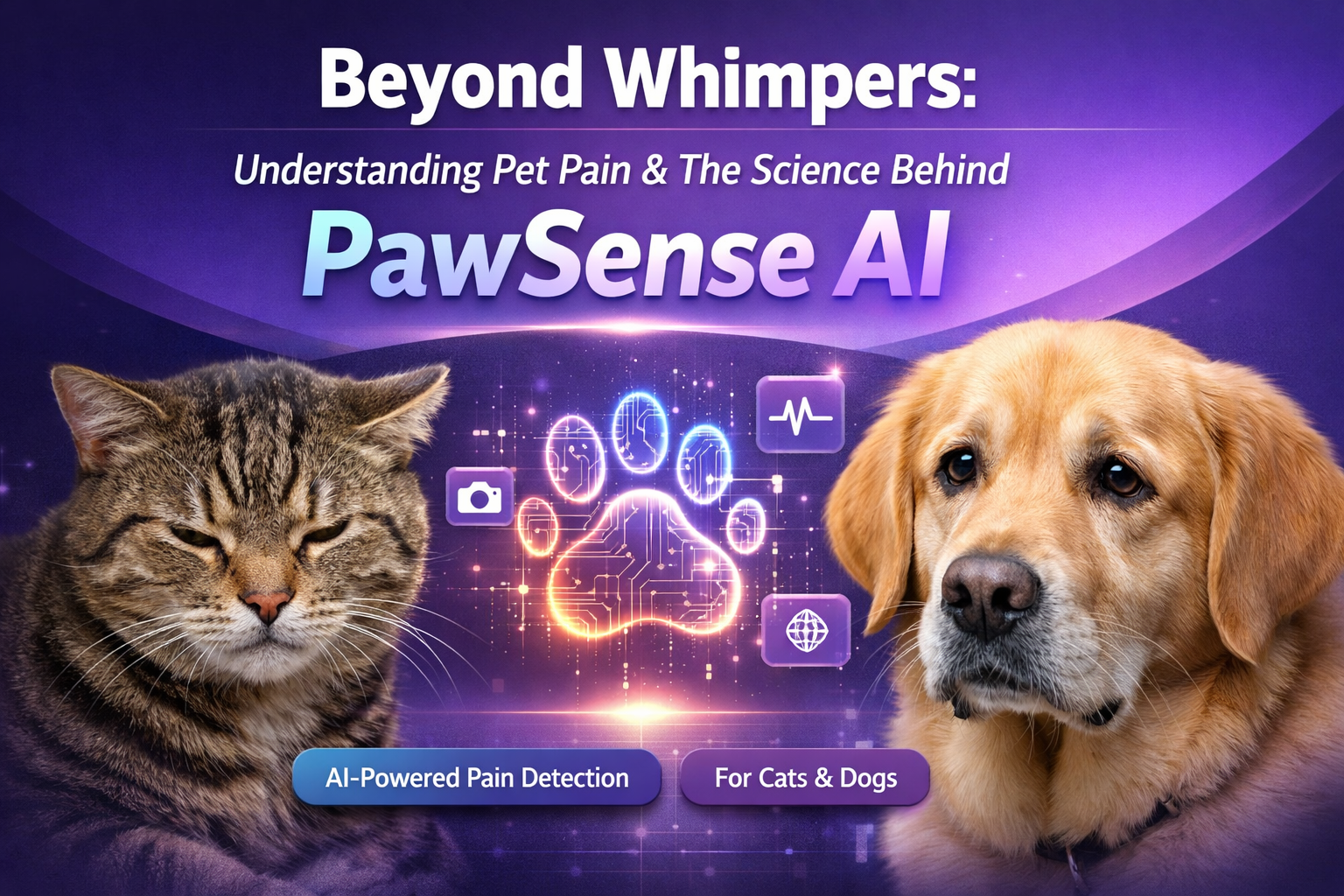
Our beloved pets communicate in myriad ways – a wagging tail, a purring rumble, a happy bark. Yet, when it comes to pain, their communication often becomes subtle, even hidden. As pet owners, we often wish for a clear sign, a direct voice that tells us when our furry friends are hurting. This challenge in pet pain detection can lead to delayed treatment and prolonged suffering, leaving us feeling helpless.
Recognizing the urgent need for a more intuitive and accurate way to understand our pets' discomfort, PawSense AI has developed an innovative web application. By leveraging cutting-edge AI pet pain analysis, PawSense empowers owners to identify the often-missed cat pain signs and dog pain symptoms through simple photo uploads and behavioral details. This article delves into the complexities of pet pain, explains the established veterinary scales used to assess it, and uncovers the remarkable science behind how PawSense AI brings this animal pain detection technology directly to your fingertips.
We'll explore why early detection is critical for your pet's well-being and how PawSense AI bridges the communication gap between humans and their animal companions. You'll learn about the advanced computer vision models that analyze subtle facial expressions and body language, turning complex veterinary science into an accessible tool for everyday pet owners. Join us as we unlock the silent language of pet pain and reveal how artificial intelligence is revolutionizing proactive pet care.
The Silent Language of Pet Pain: Why Early Detection Matters
Pets are masters at masking their pain. This innate survival instinct, inherited from their wild ancestors, means that overt signs of distress are often only visible when a condition has become severe. A limping dog, a vocal cat – these are usually clear indicators that pain has progressed beyond its initial stages. However, the early, subtle cues are far more challenging for even the most attentive owner to spot.
Missing these early pet pain detection signals can have significant consequences. What might start as mild discomfort could escalate into chronic pain, leading to secondary health issues, behavioral changes, and a diminished quality of life. Undetected pain can also hinder recovery from injuries or surgeries, making rehabilitation more difficult and prolonged. Moreover, conditions like arthritis, dental disease, or even internal organ issues can progress silently, causing immense suffering before any clear symptoms manifest.
The importance of early pet pain detection cannot be overstated. Proactive identification allows for prompt veterinary intervention, leading to faster diagnosis, more effective treatment, and better outcomes. It means managing conditions before they become debilitating, preserving your pet's mobility, comfort, and overall happiness. By understanding and addressing pain early, we can significantly improve our pets' quality of life and potentially extend their healthy years. It’s about being a voice for those who cannot speak, ensuring their comfort and well-being every step of the way. To truly grasp why catching these signals early is vital, dive deeper into Why Early Pet Pain Detection is Crucial for Your Furry Friend's Life.
Decoding Distress: Feline Grimace Scale & Glasgow Pain Scale Explained
For veterinarians, assessing pain in animals has long relied on observation and established scientific scales. Two of the most prominent are the Feline Grimace Scale (FGS) and the Glasgow Composite Pain Scale (GCPS). These tools provide standardized methods for evaluating pain by analyzing specific behavioral and physiological indicators.
The Feline Grimace Scale (FGS) is a non-invasive, reliable tool developed specifically for cat pain signs. It focuses on changes in five key facial features: ear position, orbital tightening (narrowing of the eye opening), muzzle tension, whisker change, and head position. Each of these "action units" is scored from 0 (no pain) to 2 (obvious pain), providing a composite score that correlates to the severity of discomfort. For example, a cat in pain might have ears rotated outwards, narrowed eyes, and whiskers pulled back or straightened. Understanding the nuances of the FGS is crucial for anyone trying to decipher their cat's silent plea.
Similarly, the Glasgow Composite Pain Scale (GCPS) is widely used for dog pain symptoms assessment. This scale is more comprehensive, incorporating various behavioral categories such as vocalization, general demeanor, response to touch, mobility, and specific body postures. Each category is assigned a score, leading to a total that indicates pain severity. A dog experiencing pain might exhibit tucked-up abdomen, reluctant movement, whimpering, or even aggression upon palpation. Both the FGS and GCPS require trained observers to apply them accurately, making them challenging for the average pet owner to utilize effectively at home. These scales are vital in veterinary practice, offering objective measurements in situations where animals cannot vocalize their pain directly. For a detailed breakdown of these critical assessment tools, consider reading Demystifying Pet Pain Scales: FGS & GCPS Explained for Owners.
How PawSense AI's Computer Vision Detects Subtle Cues
Bridging the gap between complex veterinary assessment scales and the everyday pet owner is where PawSense AI truly shines. Our innovative platform takes the principles of established scales like the Feline Grimace Scale and Glasgow Composite Pain Scale and translates them into an accessible AI pet pain analysis tool through advanced animal pain detection technology. The core of this capability lies in our use of sophisticated computer vision and the powerful Google Gemini 2.5 Pro Vision model.
When you upload a photo of your pet to PawSense AI, the journey begins. Our system doesn't just see an image; it "sees" the intricate details of your pet's face and body language. The Gemini 2.5 Pro Vision model, a state-of-the-art AI, is trained on vast datasets of animal images, including those clinically annotated for pain. This training allows it to recognize subtle indicators that might be imperceptible to the human eye, even for experienced pet owners.
For cats, the AI meticulously analyzes the five key facial action units of the FGS – ear position, orbital tightening, muzzle tension, whisker changes, and head position. It looks for the minute shifts that betray discomfort, assigning scores based on what it "learns" from its extensive training. For dogs, while the GCPS is broader, the AI focuses on visually discernible elements such as facial expressions, posture, and body tension, which are crucial dog pain symptoms. By processing these visual cues, the AI provides a probability score of pain, essentially simplifying the complex scoring system of veterinary scales into an easy-to-understand result for pet owners. This computer vision pet pain detection capability means you no longer have to be a veterinary expert to spot potential discomfort in your furry friend. To understand more about the technological backbone, explore Gemini 2.5 Pro & PawSense: The Brain Behind AI Pet Pain Detection.
The Future of Pet Health Monitoring with Artificial Intelligence
The integration of AI pet pain analysis into routine pet care represents a significant leap forward in animal pain detection technology. PawSense AI is more than just a diagnostic tool; it's a new paradigm for proactive pet health monitoring. By offering a quick and accessible method for pet pain detection, it empowers pet owners to take a more active role in their companions' well-being.
Imagine being able to perform daily wellness checks that go beyond simple observation, allowing you to catch the earliest cat pain signs or dog pain symptoms before they escalate. This capability is invaluable for managing chronic conditions like arthritis, monitoring recovery after surgery, or simply ensuring your pet remains comfortable as they age. PawSense AI becomes a crucial partner in monitoring pet recovery & chronic conditions, providing consistent, data-driven insights that complement regular veterinary visits. It’s designed to be a supplementary tool, offering valuable information to share with your veterinarian, facilitating more informed discussions and tailored treatment plans.
Moreover, PawSense AI's commitment to global pet care is evident in its bilingual English & Chinese support, ensuring that language is not a barrier to accessing this vital technology. This widespread accessibility underscores the belief that every pet, regardless of location, deserves the benefit of early pain detection. By transforming complex veterinary science into a user-friendly application, PawSense AI is not just detecting pain; it's fostering a deeper, more empathetic connection between pets and their humans, paving the way for a future where no pet has to suffer in silence. Discover the full capabilities of PawSense: AI Pet Pain Detection for Dogs & Cats - Your Pet's Silent Language Revealed and how it can bring peace of mind to your pet care routine. For a deeper dive into how this technology can integrate into your home, you might find Unlock Peace of Mind: Practical Uses for PawSense AI Pet Pain Analysis at Home incredibly helpful.
Frequently Asked Questions
Q: How accurate is PawSense AI in detecting pet pain?
A: PawSense AI leverages the Google Gemini 2.5 Pro Vision model, trained on extensive datasets of clinically annotated animal images for pain assessment. While it provides a highly reliable probability score for pain, it is designed as a screening tool to empower pet owners and should not replace a professional veterinary diagnosis.
Q: Can PawSense AI tell me the cause of my pet's pain?
A: PawSense AI can indicate the presence and probability of pain based on visual cues. However, it cannot diagnose the specific underlying cause of that pain (e.g., arthritis, injury, dental issue). For diagnosis and treatment, a consultation with a veterinarian is always necessary.
Q: Is PawSense AI free to use?
A: Yes, PawSense AI offers a free basic analysis that provides an instant pain probability score. For more in-depth insights, including multi-dimensional analysis, detailed reports, and home observation tips, a paid detailed report is available. You can learn more about the differences in Free Pain Check vs. Pro Reports: Maximizing PawSense for Your Pet.
Q: What should I do if PawSense AI indicates my pet is in pain?
A: If PawSense AI suggests your pet is experiencing pain, it's crucial to contact your veterinarian promptly. Share the PawSense report and your observations. The AI's insights can help your vet initiate further examination and treatment more effectively.
Q: What types of pets does PawSense AI support?
A: PawSense AI currently supports pet pain detection for both cats, utilizing elements of the Feline Grimace Scale, and dogs, incorporating aspects of the Glasgow Composite Pain Scale for analysis.
Conclusion
The inability of our pets to vocalize their pain has long been a source of anxiety and frustration for dedicated pet owners. However, the advent of animal pain detection technology like PawSense AI is fundamentally changing this dynamic. By harnessing the power of advanced AI pet pain analysis and computer vision, PawSense AI provides an unprecedented ability to understand the subtle cat pain signs and dog pain symptoms that often go unnoticed.
We’ve seen how traditional veterinary scales, while effective, require expert interpretation. PawSense AI democratizes this expertise, bringing sophisticated pet pain detection capabilities directly to your smartphone or computer. This allows for early pet pain detection, enabling you to act swiftly and consult your veterinarian before conditions worsen. It’s about more than just technology; it’s about fostering a deeper, more informed connection with our animal companions and ensuring their comfort and happiness.
Don't let your pet suffer in silence. Empower yourself with the knowledge and tools to understand their needs. Visit PawSense AI today and take the first step towards a future where every pet's silent language of pain is understood, and their well-being is prioritized.