🐾 Blog Article
Spotting Dog Pain: AI Detection for Canine Comfort
Discover how to identify subtle dog pain signs using AI-powered tools like PawSense. Understand the Glasgow Pain Scale and learn how early detection enhances your dog's well-being.
Spotting Dog Pain: AI Detection for Canine Comfort
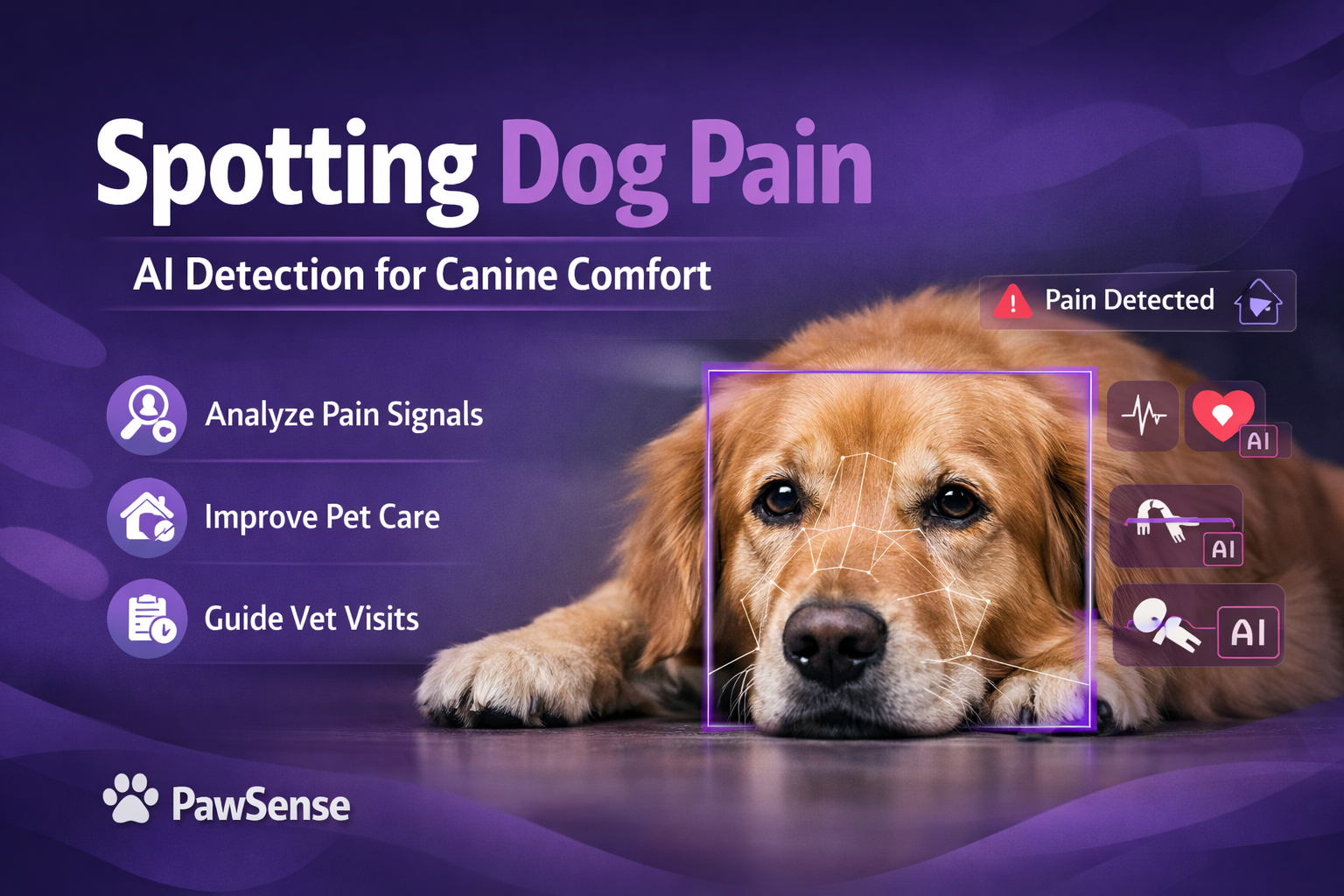
As a devoted dog owner, you want nothing more than for your furry companion to live a happy, healthy, and pain-free life. However, unlike humans, dogs can't tell us when they're hurting. They are masters at hiding discomfort, often displaying only subtle dog pain signs that can be easily missed. This innate stoicism, a survival instinct from their wild ancestors, means that by the time overt symptoms appear, their pain might be significant. Recognizing these nuanced cues is crucial for ensuring their comfort and preventing conditions from worsening.
The challenge lies in translating your dog's "silent language." Are they just tired, or is that lethargy a sign of underlying pain? Is a slight limp an occasional stiffness, or something more serious? Traditional methods rely heavily on direct observation and veterinary expertise, which can be limited to periodic check-ups. Fortunately, advancements in artificial intelligence are offering pet owners a powerful new tool in their arsenal for early dog pain detection.
This comprehensive guide will walk you through the common and subtle indicators of canine pain, introduce you to the veterinary-validated Glasgow Composite Pain Scale for dogs, and reveal how innovative AI technology, like the PawSense app, is revolutionizing how we identify discomfort in our beloved pets. By understanding the signs and utilizing cutting-edge tools, you can become a more effective advocate for your dog's well-being, ensuring their comfort and health for years to come. Let's explore how to become a pro-active guardian of your dog's comfort.
Decoding Your Dog's Distress: Common and Subtle Pain Indicators
Understanding if your dog is in pain can feel like solving a complex puzzle. Their signs are often non-specific and can mimic other issues, making accurate identification challenging. However, by paying close attention to both their typical behaviors and their subtle shifts, you can begin to piece together a clearer picture. It's not just about obvious limping; many dog pain signs are far more nuanced.
Behavioral Changes: The Silent Alarms
Changes in your dog's normal behavior are often the first, most telling indicators of pain. A dog suffering discomfort might:
- Become withdrawn or unusually clingy: Some dogs will hide away, isolating themselves, while others might seek constant reassurance and proximity.
- Exhibit aggression or irritability: A normally gentle dog might snap or growl when approached or touched, especially if the painful area is inadvertently aggravated.
- Show reluctance to move: They might hesitate before jumping onto furniture, climbing stairs, or going for walks. Their once enthusiastic greeting might be replaced by a slow, deliberate movement.
- Experience changes in sleep patterns: Restlessness, difficulty getting comfortable, or excessive sleeping can all point to discomfort.
- Groom excessively: Dogs might lick, chew, or bite a particular area of their body, not just for hygiene, but also as a way to self-soothe or try to alleviate pain. This can lead to skin irritation or hot spots.
- Lose interest in play or activities: A once playful pup might turn down their favorite game, showing a general lack of enthusiasm for activities they usually enjoy.
Physical Manifestations: Beyond the Obvious
While a visible limp is a clear red flag, many physical signs are much more subtle and can be easily overlooked. These are critical clues for any dog pain symptoms checker:
- Stiffness or altered gait: Beyond a limp, observe if your dog's walk is less fluid, if they're hesitant to put weight on a limb, or if their posture seems hunched or unnatural.
- Panting or trembling: Excessive panting when not exercising or in a hot environment can indicate pain. Trembling, especially localized trembling in a limb or body part, is another sign.
- Changes in appetite or thirst: A decrease in food or water intake, or even a sudden increase, can sometimes be linked to pain or discomfort that affects their digestion or general well-being.
- Facial expressions: While subtle, dogs can exhibit "grimace" signs similar to cats. Look for narrowed eyes, tensed muzzle, flattened ears, or an overall "worried" expression.
- Reluctance to be touched: If your dog flinches, pulls away, or vocalizes when you touch a specific area that they usually enjoy being petted, it's a strong indicator of localized pain.
- Body Posture: A dog in abdominal pain might adopt a "prayer position" (front end down, rear end up). Back pain can lead to a hunched posture.
By compiling these observations, you’re creating a vital snapshot of your dog’s health. Don't dismiss minor changes; they could be early warnings. If you’re ever in doubt, it’s always best to consult with a veterinarian to get a professional assessment.
Leveraging the Glasgow Composite Pain Scale for Dogs
For veterinarians and increasingly for informed pet owners, standardized pain assessment tools are invaluable. One of the most respected and widely used is the Glasgow Composite Pain Scale (GCPS) for dogs. This scale provides a systematic, objective way to assess and quantify pain, moving beyond subjective interpretation. Understanding the Glasgow Pain Scale dog version can significantly enhance your ability to communicate with your vet and monitor your dog's progress.
What is the Glasgow Composite Pain Scale (GCPS)?
The GCPS is a clinically validated tool developed by veterinary researchers at the University of Glasgow. It's designed to evaluate acute pain in dogs, particularly in post-operative or critically ill patients, but its principles are highly applicable for any form of pain assessment. Rather than simply asking "is the dog in pain?", it breaks down pain assessment into observable behaviors, assigning scores to each. This creates a more comprehensive and reproducible measure of a dog's pain level.
Key Parameters of the GCPS
The GCPS evaluates several dimensions of a dog's demeanor and physical state, typically observed over a short period. These include:
- Vocalization: Is the dog whining, howling, groaning, or silent?
- Activity: How does the dog move? Are they restless, quiet, or reluctant to move?
- Demenaor/Interaction: How does the dog respond to its environment and human interaction? Are they bright and responsive, depressed, or aggressive?
- Body Posture: Is their body tense, hunched, or relaxed?
- Response to Touch/Palpation: How do they react when the painful area is gently touched? Do they flinch, guard, or show no reaction?
- Appetite and Hydration: While not always a direct pain indicator, changes can be correlated.
Each of these categories has several descriptors, and a numerical score is assigned based on the observed behavior. These scores are then totaled to give an overall pain score. A higher score indicates a greater degree of pain. This systematic approach helps minimize observer bias and provides a common language for veterinary professionals and owners to discuss a dog's pain. For a deeper dive into this and other scales, check out our article on Demystifying Pet Pain Scales: FGS & GCPS Explained for Owners.
Why is the GCPS Important for Owners?
While you don't need to be a veterinary expert to utilize the GCPS, understanding its components empowers you to:
- Communicate more effectively with your vet: You can provide precise observations using the framework of the GCPS, helping your vet make more accurate diagnoses and treatment plans.
- Objectively monitor pain at home: Especially useful for dogs recovering from surgery or managing chronic conditions, you can track changes in their pain levels over time, indicating if medication is working or if a condition is worsening.
- Advocate for your dog: By identifying specific behaviors linked to pain, you can advocate more confidently for appropriate pain management strategies.
The GCPS provides a robust framework, but even with this tool, subtle cues can still be missed. This is where advanced technology is stepping in to offer an unprecedented level of insight.
Beyond Limping: Detecting Subtle Canine Pain from Photos with AI
The ability of dogs to mask pain is both a marvel of evolution and a significant challenge for their human caregivers. Their instinct is to appear strong, making early dog pain detection a constant struggle. While we've discussed common indicators and the Glasgow Pain Scale, many truly subtle signs — particularly in facial expressions and micro-movements – often escape even the most observant pet owner. This is where artificial intelligence, specifically computer vision, is making a revolutionary impact.
The Challenge of Subtle Pain: Why AI is Needed
Dogs, like many prey animals, instinctively hide weakness to avoid appearing vulnerable. This means they often won't vocalize pain unless it's extreme, and they might continue to eat, drink, and even play, albeit with less enthusiasm or altered movements. These "masked" pain signals include:
- Micro-expressions: Slight changes around the eyes, mouth, or ears that are too fleeting for the human eye to consistently catch or interpret.
- Subtle postural shifts: A slight shift in weight, a barely perceptible tension in the back, or an altered way of holding their head – these can be critical but almost invisible indicators.
- Reduced range of motion: They might still jump, but not as high; they might still run, but with a slightly shorter stride.
These nuanced cues are precisely what AI excels at detecting. Our brains are hardwired to see patterns, but AI can process vast amounts of data and identify patterns that are far too complex or minute for human perception.
AI's Role in Facial & Postural Analysis
PawSense leverages state-of-the-art AI, specifically powerful vision models like Google Gemini 2.5 Pro, to analyze uploaded images of your dog. This technology doesn't just "see" a dog; it's trained on thousands of images of dogs exhibiting various degrees of pain, alongside expert veterinary assessments. How PawSense AI Detects Pet Pain: The Science Behind the App explains the intricate processes involved.
The AI system can identify:
- Facial Action Units (FAUs): These are specific changes in facial features, such as eye narrowing, ear position, muzzle tension, and changes around the lips. For instance, a "grimace" in dogs might involve slightly narrowed eyes or a tense brow.
- Body Posture and Weight Distribution: The AI analyzes the dog's overall body shape, limb positioning, and how weight is distributed, looking for indicators like hunched backs, shifted balance, or unusual limb angles that suggest discomfort.
- Muscle Tension: Advanced algorithms can even infer muscle tension from subtle changes in the dog's contours.
By analyzing these numerous data points against established veterinary pain scales, the AI can generate a highly objective assessment of pain probability. This allows the PawSense app to function as a sophisticated dog pain symptoms checker right from your phone.
How PawSense Works: Bringing AI to Your Fingertips
The process is remarkably simple for pet owners, yet incredibly powerful in its backend:
- Upload Pet Photos: You simply take or upload a few clear photos of your dog. The app provides guidance on optimal angles and lighting.
- Provide Behavioral Context: You add details about your dog's recent behavior, such as changes in appetite, activity, or vocalization. This combines AI visual analysis with your crucial human observation.
- AI Analysis: The Google Gemini 2.5 Pro vision model processes the images, comparing your dog's facial expressions and body posture to a vast database of pain-indexed images.
- Receive Pain Probability & Insights: Within moments, you receive a pain probability score, indicating the likelihood of your dog experiencing discomfort. This is often accompanied by a dimension-by-dimension analysis, highlighting specific areas like "facial tension" or "postural discomfort."
This technology offers an unprecedented opportunity to catch pain early, even before it becomes overtly obvious, enabling you to take proactive steps for your dog's health and comfort.
Ensuring Your Dog's Well-being with PawSense
Integrating an AI-powered tool like PawSense into your pet care routine offers a proactive approach to managing your dog's health. It’s about more than just identifying pain; it’s about understanding, monitoring, and taking action to ensure their ongoing comfort. PawSense acts as your personal dog pain symptoms checker, providing insights that empower you as an owner.
Instant Pain Probability & Dimension Analysis
One of the most immediate benefits of PawSense is its ability to provide an instant pain probability score. This percentage indicates the likelihood of your dog experiencing pain at the time the photo was taken. But it goes beyond a simple number. For a small fee, the detailed reports offer a dimension-by-dimension analysis, breaking down the assessment into specific areas like:
- Facial Grimace Score: How much tension or discomfort is visible in their face.
- Body Posture Score: Analysis of their stance, weight distribution, and overall body language.
- Activity/Behavior Indicators: Correlating your input with visual cues.
This granular breakdown helps you understand where the AI is detecting pain signals, giving you more specific information to discuss with your vet. For a complete understanding of what these detailed reports entail, read Beyond Probability: PawSense Detailed Reports for Holistic Pet Care.
Personalized Recommendations and Proactive Steps
Beyond just a score, PawSense offers actionable advice tailored to your dog's results:
- Possible Causes: Based on the type and severity of pain detected, the app might suggest common ailments or conditions that could be contributing.
- Home Observation Tips: Guidance on what else to look for at home, how to safely interact with your dog, and how to create a comfortable environment.
- Vet Visit Recommendations: Clear advice on whether a vet visit is recommended, and the urgency of such a visit, helping you make informed decisions.
This guidance empowers you to take immediate, appropriate action, whether it's simply monitoring your dog more closely or scheduling an urgent veterinary appointment.
Monitoring Progress & Chronic Conditions with AI
PawSense isn't just for acute pain detection; it’s an invaluable tool for long-term health management, especially for early dog pain detection in chronic conditions.
- Post-Operative Recovery: Regularly checking your dog with PawSense during recovery from surgery allows you to objectively track their pain levels as they heal, ensuring their pain medication is effective and adjusting care as needed.
- Chronic Pain Management: For dogs with conditions like arthritis, hip dysplasia, or other long-term ailments, PawSense can help you monitor their comfort levels between vet visits. This continuous monitoring allows you to identify flare-ups quickly and adjust their pain management plan in consultation with your veterinarian. Monitoring Pet Recovery & Chronic Conditions with PawSense AI provides more insights into this use case.
- Proactive Wellness Checks: Even for seemingly healthy dogs, occasional checks can establish a baseline and help you catch subtle changes that might indicate early signs of an issue, long before it becomes a major problem.
By providing consistent, objective data, PawSense helps you and your vet work together to maintain your dog's optimal comfort and quality of life.
Frequently Asked Questions About Dog Pain Detection with AI
Q1: How accurate is AI for detecting dog pain compared to a vet?
A1: While AI tools like PawSense are highly accurate in identifying pain signals based on visual cues, they are designed to be a supplementary tool, not a replacement for a veterinary professional. The AI analyzes subtle facial expressions and body posture against validated pain scales, offering an objective probability of pain. A vet combines this visual assessment with physical examination, medical history, and diagnostic tests for a definitive diagnosis.
Q2: Can PawSense replace a vet visit if my dog is showing clear signs of pain?
A2: No. If your dog is showing clear, significant signs of pain, is in distress, or if the PawSense app indicates a high probability of pain, you should always consult your veterinarian immediately. PawSense is an excellent tool for early detection and monitoring, providing insights to help you decide when a vet visit is necessary and to provide your vet with objective data, but it cannot diagnose or treat medical conditions.
Q3: What kind of photos work best for the PawSense app to detect dog pain?
A3: For the most accurate results, use clear, well-lit photos where your dog's face and body are clearly visible. Avoid blurry images or photos with harsh shadows. Candid shots when your dog is relaxed or engaged in mild activity are often best, rather than posed photos. Ensure the entire dog is in the frame if possible, for comprehensive posture analysis.
Q4: Is there a free option to check my dog's pain using PawSense?
A4: Yes, PawSense offers a free pet pain detection feature that provides a pain probability score. This allows you to quickly assess your dog's comfort level. For more in-depth insights, including dimension-by-dimension analysis, possible causes, home observation tips, and vet recommendations, you can opt for the detailed paid reports.
Conclusion
Recognizing and addressing pain in our canine companions is one of the most fundamental responsibilities of pet ownership. Dogs, with their innate ability to mask discomfort, often suffer in silence, making early dog pain detection a critical yet challenging endeavor. By understanding the common and subtle dog pain signs, familiarizing ourselves with veterinary tools like the Glasgow Pain Scale dog version, and embracing cutting-edge technology, we can become more attuned to their needs.
PawSense bridges the communication gap between you and your dog, transforming subtle visual cues into actionable insights. By leveraging advanced AI to analyze facial expressions and body posture, it serves as an invaluable dog pain symptoms checker, providing objective data that empowers you to make informed decisions about your pet's health. Whether for routine wellness checks, monitoring recovery, or managing chronic conditions, PawSense offers a new level of proactive care.
Don't wait for obvious limps or distressed cries. Embrace the future of pet care and give your dog the gift of early intervention and continuous comfort. Try PawSense's free pain check today and learn to speak your dog's silent language, ensuring a happier, healthier life for your best friend.