🐾 Blog Article
Finally Understand Your Pet's Pain: Overcoming Communication Barriers with AI
Break the pet communication barrier and understand pet discomfort with PawSense AI. Our app helps pet owners detect pain in dogs and cats through AI analysis of body language.
Finally Understand Your Pet's Pain: Overcoming Communication Barriers with AI
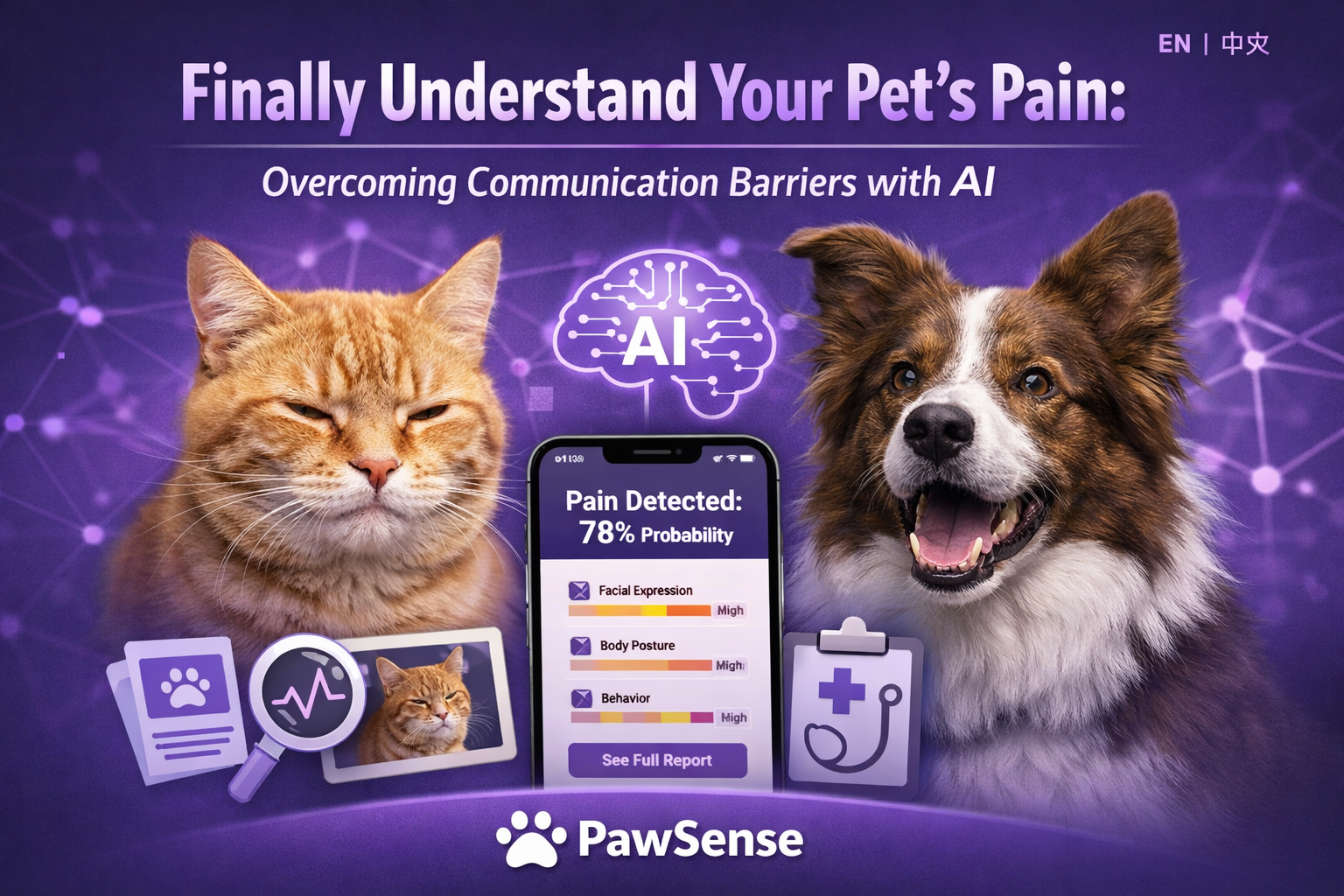
As loving pet owners, one of our greatest fears is the inability to understand when our beloved furry companions are suffering. Pets cannot verbally express their pain, leaving us to decipher subtle behavioral changes, often after discomfort has already progressed. This communication barrier creates anxiety and can delay crucial veterinary intervention, impacting our pets' quality of life. Imagine a world where you could finally understand your pet's pain with clarity and confidence, thanks to groundbreaking technology designed to overcome this age-old challenge.
The good news is that this world is no longer a distant dream. Artificial Intelligence (AI) is rapidly transforming pet care, offering innovative solutions to bridge the communication gap between humans and animals. Specifically, AI-powered applications like PawSense are empowering pet owners to detect pain signals in dogs and cats early, helping to overcome pet communication barriers and foster proactive health management. By analyzing visual cues and combining them with behavioral insights, these tools provide an unprecedented level of understanding into our pets' well-being. This article delves into the frustration pet owners face, how AI interprets these vital non-verbal cues, and how PawSense acts as your pet's voice, strengthening the bond you share.
The Frustration of Not Knowing: Pet Owners' Biggest Fear
Every pet owner has experienced that gnawing feeling: "Is my pet okay?" Our pets are masters at hiding pain, an instinct inherited from their wild ancestors to avoid appearing vulnerable. A dog might limp subtly or become less playful, while a cat might simply withdraw, sleep more, or stop grooming. These signs are often ambiguous, making it incredibly difficult for even the most attentive owner to distinguish between a minor off day and a serious health issue. This uncertainty is a significant pet owner health guide challenge, leading to stress and delayed action.
The consequences of undetected pet pain can be severe. Chronic pain can lead to reduced mobility, behavioral problems, loss of appetite, and a general decline in quality of life. Acute pain, if not addressed promptly, can exacerbate underlying conditions or prolong recovery from injuries. Without a reliable way to gauge their pets' comfort levels, owners often rely on their "gut feeling," which, while valuable, can be inconsistent and subjective. This communication gap is precisely where modern solutions are needed most, offering clarity where previously there was only doubt.
Traditional methods of assessing pet pain often involve observing behavior over time, consulting with veterinarians, or trying to understand complex veterinary pain scales. While essential, these approaches can be time-consuming, expensive, or require expert interpretation. The daily challenge for pet owners is to identify these subtle shifts in real-time, at home, before they become urgent. The absence of clear, objective indicators creates a constant state of vigilance and worry, making the need for advanced AI animal health solutions more pressing than ever.
How AI Interprets Non-Verbal Pet Cues
The revolution in AI animal health comes from its ability to process and interpret vast amounts of data in ways humans cannot. For pet pain detection, this means analyzing visual information – primarily facial expressions and body posture – against established veterinary pain assessment scales. Pets communicate volumes through their subtle non-verbal cues, from the position of their ears to the tension in their muscles, but interpreting these signals accurately has historically required extensive veterinary training.
PawSense utilizes advanced AI, specifically the Google Gemini 2.5 Pro vision model, to act as an expert interpreter. When you upload a photo of your pet, the AI goes to work, analyzing key anatomical features and postural indicators. For cats, it applies principles from the Feline Grimace Scale (FGS), which assesses changes in ear position, orbital tightening (squeezing of eyelids), muzzle tension, whisker change, and head position. For dogs, it leverages the Glasgow Composite Pain Scale (GCPS), looking at factors like posture, mobility, vocalization, appetite, and interaction with the environment. To delve deeper into these scales, you can read our article on Demystifying Pet Pain Scales: FGS & GCPS Explained for Owners.
This sophisticated computer vision technology allows the app to identify patterns indicative of pain that might be imperceptible to the human eye or easily dismissed as normal behavior. The AI doesn't just guess; it's trained on thousands of expertly annotated images and data points, enabling it to detect nuances that correlate with specific levels of discomfort. This objective, data-driven analysis helps to overcome pet communication barriers by providing a consistent and reliable measure of your pet's state. To learn more about the technology, check out How PawSense AI Detects Pet Pain: The Science Behind the App.
From Confusion to Clarity: PawSense as Your Pet's Voice
PawSense transforms the vague anxieties of pet ownership into actionable insights. By acting as your pet's dedicated voice, the app provides a clear, data-backed understanding of their physical state. No more second-guessing: simply upload a photo and some behavioral details, and the AI goes to work, processing the information to generate a pain probability score. This initial assessment gives you immediate clarity on whether your pet might be experiencing discomfort. For a general overview of the app's capabilities, visit PawSense: AI Pet Pain Detection for Dogs & Cats - Your Pet's Silent Language Revealed.
Beyond a simple probability score, PawSense offers detailed reports that break down the analysis dimension by dimension. This means you won't just know if your pet is likely in pain, but where the AI detected potential indicators of discomfort, such as specific facial changes or postural shifts. These insights are invaluable, providing a granular view that helps you understand pet discomfort with unprecedented detail. The app also suggests possible causes, offers home observation tips, and provides tailored recommendations on when a vet visit is advisable, empowering you to make informed decisions for your pet's health.
Whether you're concerned about a sudden change in behavior or want to proactively monitor your pet's long-term wellness, PawSense offers a solution. The free pain detection feature provides instant AI analysis, giving you peace of mind or an early warning. For those seeking deeper insights, the paid detailed reports offer a comprehensive breakdown, moving beyond mere probability to help you implement holistic pet care. This blend of accessibility and depth makes PawSense an indispensable tool for bridging the communication gap. You can explore the benefits of both options in our article Free Pain Check vs. Pro Reports: Maximizing PawSense for Your Pet.
Building a Stronger Bond Through Better Understanding
The ability to understand your pet's pain with the help of AI goes far beyond simply identifying a medical issue; it profoundly strengthens the bond you share. When you can accurately perceive and respond to your pet's discomfort, you foster a deeper level of trust and mutual respect. This enhanced communication helps to build a relationship rooted in empathy and proactive care, ensuring your pet feels heard and supported. By removing the guesswork, you become a more confident and effective advocate for their health.
Knowing when your pet is in pain allows you to intervene early, potentially preventing conditions from worsening and minimizing suffering. This proactive approach to pet care is a cornerstone of responsible ownership. Regular checks with PawSense can become an integral part of your pet's routine, similar to daily walks or meal times, reinforcing their sense of security and your commitment to their well-being. This constant vigilance, empowered by AI, ensures that you're always attuned to their subtle needs.
Ultimately, using tools like PawSense empowers you to be the best possible caregiver. By leveraging technology to overcome pet communication barriers, you're not just managing their physical health; you're nurturing their emotional health by demonstrating unwavering care and attention. This deeper understanding translates into a happier, healthier pet and a more fulfilling companionship for both of you. Take the first step towards this enhanced understanding and try PawSense today! Try PawSense for Free!
Frequently Asked Questions
Q1: How accurate is AI pet pain detection?
A1: AI pet pain detection apps like PawSense leverage advanced machine learning models trained on extensive datasets of pet behaviors and facial expressions, often correlating with veterinary pain scales like FGS and GCPS. While highly accurate in identifying potential pain signals, they are tools to assist owners and should complement, not replace, professional veterinary advice.
Q2: What kind of pet behaviors can AI detect?
A2: AI primarily analyzes non-verbal cues from photos, such as facial expressions (ear position, orbital tightening, muzzle tension, whisker changes) and body posture. When combined with behavioral details provided by the owner (e.g., changes in appetite, activity level, vocalization), the AI can provide a more comprehensive assessment of potential discomfort.
Q3: Can PawSense detect specific types of pain (e.g., joint pain vs. internal pain)?
A3: PawSense provides a general pain probability and highlights dimensions of discomfort. While it can't diagnose the specific cause of pain, its ability to identify that pain is present allows owners to seek veterinary attention. A vet can then perform further diagnostics to pinpoint the exact issue, whether it's joint pain, dental pain, or internal discomfort.
Q4: Is PawSense suitable for all dog and cat breeds?
A4: Yes, PawSense is designed to work across a wide range of dog and cat breeds. While some breeds might have more pronounced or subtle facial features, the AI models are trained to recognize universal pain indicators derived from established veterinary scales that apply across species.
Conclusion
The enduring challenge of understanding our pets' silent language of pain has long been a source of frustration and anxiety for dedicated owners. Yet, thanks to the remarkable advancements in Artificial Intelligence, this pet communication barrier is finally being broken down. Tools like PawSense are at the forefront of this revolution, offering an intuitive and powerful way to understand pet discomfort through objective, AI-driven analysis.
By interpreting subtle non-verbal cues from photos and combining them with your observations, PawSense empowers you to identify potential pain signals early, transforming uncertainty into clarity. This not only allows for timely veterinary intervention but also fosters a deeper, more empathetic bond with your cherished companion. Being able to truly hear and respond to your pet's needs is the ultimate pet owner health guide, ensuring they lead happier, healthier lives. Don't let your pet suffer in silence – embrace the future of pet care and give your furry friend the voice they deserve.