🐾 Blog Article
PawSense AI: Your Top Questions Answered About Pet Pain Detection in 2026
Discover everything about PawSense AI, the innovative pet pain app 2026. Get answers on how AI pet pain analysis works, its use of the feline grimace scale, and much more.
PawSense AI: Your Top Questions Answered About Pet Pain Detection in 2026
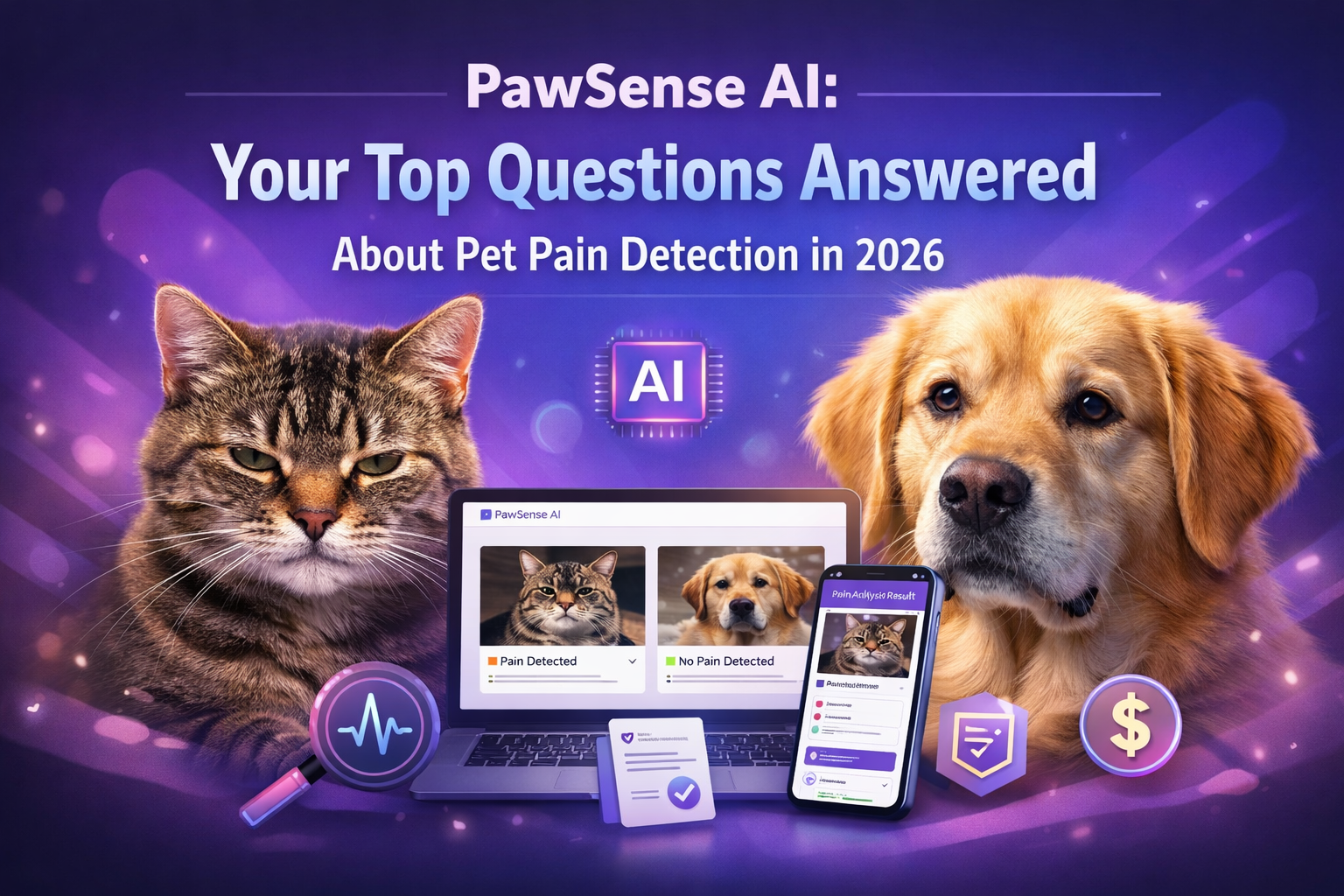
As a dedicated pet owner, you know your furry companion's health and happiness are paramount. Yet, pets are masters at hiding pain, often showing only subtle signs that are easy to miss. This silent suffering can lead to delayed diagnoses, prolonged discomfort, and more complex health issues down the line. What if there was a way to understand your pet's unspoken signals, even before the pain becomes obvious? This challenge is precisely what the innovative PawSense AI pet pain app 2026 aims to solve.
PawSense AI offers a revolutionary approach to pet care, leveraging cutting-edge artificial intelligence to detect and analyze pain in both cats and dogs. Imagine having a tool that helps you interpret those tiny changes in expression or behavior that might indicate discomfort. With PawSense AI, this is no longer a futuristic dream but a present-day reality, providing pet owners with peace of mind and proactive insights into their beloved animals' well-being. This article will answer your most pressing questions about PawSense AI, detailing how this powerful AI pet pain analysis tool works, what features it offers, and how it can empower you to provide the best possible care for your pet in 2026 and beyond.
From understanding the underlying technology to navigating its features and applications, we'll demystify everything about PawSense AI. Whether you're curious about the accuracy of its feline grimace scale app or how it supports different breeds, we’ve got you covered. Get ready to explore a new era of pet health monitoring, where technology bridges the communication gap between you and your cherished companion.
What is PawSense AI and How Does it Work?
PawSense AI is a groundbreaking web application designed to help pet owners detect and assess pain in their cats and dogs. At its core, it acts as a digital interpreter for your pet's subtle cues, using advanced artificial intelligence to identify signs of discomfort that might otherwise go unnoticed. The app was developed with the understanding that early detection of pain is crucial for improving a pet's quality of life and ensuring timely veterinary intervention. It’s more than just an app; it's a partner in proactive pet care.
The magic behind PawSense AI lies in its sophisticated use of Google Gemini 2.5 Pro, a state-of-the-art vision model. When you upload a photo of your pet and provide some behavioral details, the AI analyzes various visual markers. For cats, it applies the Feline Grimace Scale, meticulously examining ear position, orbital tightening, muzzle tension, whisker changes, and head posture. For dogs, it utilizes the Glasgow Composite Pain Scale, looking for indicators like changes in activity, vocalization, response to touch, and body posture. By combining these established veterinary pain assessment scales with powerful AI, PawSense provides a detailed and objective analysis.
The process is remarkably user-friendly. You simply capture a clear image or video still of your pet, focusing on their face and body, then input any observed behavioral changes. The AI then processes this information, cross-referencing it with its vast database of pain indicators. The result is an instant pain analysis, delivered right to your device. This innovative approach makes PawSense: AI Pet Pain Detection for Dogs & Cats - Your Pet's Silent Language Revealed an invaluable tool for every pet owner, offering a glimpse into your pet's internal state. To learn more about the technical aspects, you can read about How PawSense AI Detects Pet Pain: The Science Behind the App.
Is PawSense AI Free? Understanding Basic vs. Detailed Reports
One of the most common questions about any new pet care tool is its cost. PawSense AI is designed to be accessible to all pet owners, offering both free and paid features to suit different needs and budgets. This tiered approach ensures that everyone can benefit from AI-powered pet pain analysis, whether for a quick check-up or an in-depth health monitoring solution.
Free Basic Analysis: Instant Insights
The core offering of PawSense AI includes a free basic analysis. This feature allows you to upload your pet's photo and behavioral details to receive an instant, AI-powered pain probability score. This score gives you a quick, indicative assessment of whether your pet might be experiencing discomfort. It's an excellent first step for worried pet owners, providing immediate feedback and helping you decide if further investigation is needed. This free tier is perfect for routine checks, monitoring post-activity soreness, or simply gaining a baseline understanding of your pet's typical comfort levels. For more details on this, check out our guide on Free Pain Check vs. Pro Reports: Maximizing PawSense for Your Pet.
Paid Detailed Reports: Comprehensive Understanding
For those seeking a more in-depth understanding of their pet's condition, PawSense AI offers paid detailed reports for a small fee (¥9.9 CNY / $2.99 USD via Stripe). These comprehensive reports go far beyond a simple probability score. They provide a multi-dimensional breakdown of the AI's findings, highlighting specific areas of concern based on the Feline Grimace Scale or Glasgow Composite Pain Scale. The detailed report includes:
- Specific Pain Indicators: Visual explanations of facial and body cues identified by the AI.
- Severity Assessment: A more granular look at the intensity of potential pain.
- Behavioral Context Integration: How your provided behavioral details influence the overall assessment.
- Home Observation Tips: Practical advice on what to look for and how to monitor your pet's comfort at home.
- Vet Visit Recommendations: Guidance on when to consult a veterinarian and what information to provide them.
These detailed reports are invaluable for proactive care, chronic pain management, or post-operative recovery monitoring. They equip you with concrete data and actionable steps, making conversations with your vet more informed and productive. For an exhaustive look into the depth of these analyses, explore Beyond Probability: PawSense Detailed Reports for Holistic Pet Care.
Which Pain Scales Does PawSense AI Utilize for Dogs and Cats?
PawSense AI differentiates itself by integrating established, scientifically validated pain assessment scales directly into its AI analysis. This ensures that the results are not only data-driven but also align with veterinary standards for recognizing and quantifying pain in animals. By leveraging these specific scales, PawSense AI provides a nuanced understanding tailored to the unique physiological and behavioral expressions of both felines and canines.
Feline Grimace Scale (FGS) for Cats
For our feline friends, PawSense AI employs the Feline Grimace Scale (FGS). This is a widely recognized and validated tool used by veterinarians to assess acute pain in cats by evaluating changes in their facial expressions. Cats are particularly adept at masking pain, making FGS an essential instrument for detection. PawSense AI's vision model is trained to analyze five key "action units" of the FGS:
- Ear position: Flattened, rotated outward, or lowered ears can indicate discomfort.
- Orbital tightening: Narrowing of the eyes, often referred to as "squinting" or "hard eyes."
- Muzzle tension: A tightened or flattened muzzle area.
- Whisker change: Whiskers that are straight and forward-pointing compared to being pulled back or closer to the face.
- Head position: A lower head position, often below the shoulder line, can be a sign of pain.
By precisely evaluating these subtle facial changes, the PawSense AI provides a clear and objective assessment of potential pain in your cat, often before other behavioral signs become obvious. For a deeper dive into how this works specifically for cats, refer to Understanding Your Cat's Pain: The Feline Grimace Scale with PawSense.
Glasgow Composite Pain Scale (GCPS) for Dogs
When it comes to dogs, PawSense AI integrates the Glasgow Composite Pain Scale (GCPS). Also known as the Glasgow Pain Score, this scale is a comprehensive tool developed for assessing pain in dogs, particularly post-operative pain. While it also considers facial expressions, the GCPS encompasses a broader range of behavioral and physiological indicators, reflecting the diverse ways dogs express discomfort. PawSense AI's analysis for dogs looks at:
- Vocalization: Whimpering, growling, or excessive panting.
- Activity Level: Restlessness, lethargy, or reluctance to move.
- Mentation/Demeanor: Changes in how alert, interactive, or responsive they are.
- Response to Touch: Tenderness, guarding, or aggression when touched.
- Body Posture: Hunched back, tucked tail, or abnormal stance.
- Appetite and Grooming: Reductions in eating or self-care behaviors.
The AI analyzes the provided photo and behavioral details to score these various dimensions, offering a holistic view of a dog's pain level. This makes Dog Pain Assessment Made Easy: PawSense & The Glasgow Composite Pain Scale an indispensable resource for dog owners. For a comprehensive explanation of both scales and their importance, we recommend reading Demystifying Pet Pain Scales: FGS & GCPS Explained for Owners.
Can PawSense AI Be Used for All Pet Breeds and Sizes?
A natural concern for pet owners is whether a specialized tool like PawSense AI can accurately serve the vast diversity of dog and cat breeds, each with its unique physical characteristics and behavioral nuances. The good news is that PawSense AI is designed with broad applicability in mind, aiming to support as many pets as possible.
Adaptability Across Breeds
PawSense AI's underlying Google Gemini 2.5 Pro vision model is trained on an extensive and diverse dataset of animal images and behavioral patterns. This vast training allows the AI to recognize key pain indicators across a wide spectrum of breeds, rather than being limited to a select few. For instance, while a pug's facial structure is vastly different from a greyhound's, the AI can still identify universal pain cues like orbital tightening or changes in ear position that signify discomfort, even if the baseline appearance differs. Similarly, for cats, the Feline Grimace Scale principles apply effectively whether you have a flat-faced Persian or a slender Siamese. The advanced algorithms are designed to adapt and identify relevant features regardless of specific breed morphology.
Considerations for Accuracy
While PawSense AI strives for broad applicability, there are some factors that can influence the accuracy of the analysis:
- Image Quality: Clear, well-lit photos showing your pet's face and, ideally, their body are crucial for optimal analysis. Blurry images or those with poor lighting may reduce the AI's ability to pick up subtle cues.
- Behavioral Details: The more accurate and comprehensive the behavioral details you provide, the better the AI can contextualize its visual analysis. Observing and noting changes in your pet's appetite, activity, or interaction helps the system offer a more precise assessment.
- Individual Differences: Just like humans, individual pets may express pain differently. While the AI uses generalized scales, extreme individual variations might require veterinary consultation for a definitive diagnosis. PawSense AI is a tool to aid detection, not replace a vet.
Future Enhancements and Inclusivity
The development team behind PawSense AI is continuously working to refine and enhance the model's capabilities. This includes expanding the training data to further improve accuracy across even more diverse breeds and sizes. The goal is to make PawSense AI an increasingly universal tool for pet pain detection. By consistently updating the AI with new data and insights, PawSense aims to remain at the forefront of pet health technology, ensuring that its benefits are accessible to every pet owner. This commitment to inclusivity allows Unlock Peace of Mind: Practical Uses for PawSense AI Pet Pain Analysis at Home to be relevant for almost any furry family member.
Frequently Asked Questions About PawSense AI
Q: How quickly do I get results from PawSense AI?
A: You receive an instant pain analysis probability score immediately after uploading your pet's photo and behavioral details. Detailed reports are typically generated within moments as well, providing quick insights.
Q: Is PawSense AI a substitute for a veterinarian?
A: No, PawSense AI is a supplementary tool designed to help pet owners detect potential pain early and monitor their pet's comfort. It provides valuable insights that can assist in deciding when to seek professional veterinary care and what information to share with your vet. It is not a diagnostic tool and should never replace a professional veterinary examination or advice.
Q: What kind of photos work best for PawSense AI?
A: For the most accurate analysis, use clear, well-lit photos that show your pet's face (for grimace scale analysis) and ideally their body. Avoid blurry images, extreme angles, or photos where your pet's face is obscured.
Q: Can PawSense AI detect chronic pain?
A: Yes, PawSense AI can be a very effective tool for monitoring chronic pain. By performing regular checks and observing trends over time, you can track subtle changes in your pet's pain levels, helping you and your vet manage long-term conditions more effectively.
Q: Is PawSense AI available in multiple languages?
A: Yes, PawSense AI offers bilingual support in both English and Chinese, making it accessible to a wider global audience of pet owners.
Conclusion
The well-being of our pets is a responsibility we cherish, and understanding their subtle signals of pain has long been one of the biggest challenges for even the most attentive owners. With PawSense AI, pet pain detection enters a new era of clarity and accessibility. This innovative pet pain app 2026 empowers you with the ability to identify potential discomfort early, utilizing advanced AI pet pain analysis based on established veterinary scales like the Feline Grimace Scale and Glasgow Composite Pain Scale.
By offering both free basic analysis and detailed paid reports, PawSense AI caters to every need, ensuring that invaluable insights into your pet's health are just a few clicks away. It bridges the communication gap, turning guesswork into informed action and enabling proactive care that can significantly improve your furry friend's quality of life. Don't let your pet's silent signals go unnoticed. Embrace the future of pet care and gain the peace of mind that comes from truly understanding your companion.
Take the first step towards a healthier, happier life for your pet.